Diablo-Interview: Bill Roper about the Diablo-Formula and the birth of Diablo
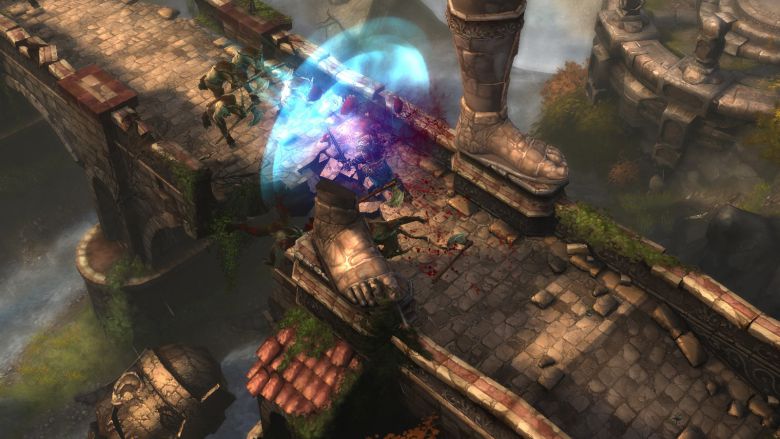
Für das 18seitige Diablo-Dossier in der Erstausgabe von PC GAMES POWER PLAYER hat Redakteur Felix Schütz wochenlang recherchiert und exklusive Interviews geführt. Wie im Heft versprochen, bieten wir als Zusatz-Service die kompletten Gespräche mit den Ex-Blizzard-Designern Bill Roper und Jeff Strain im englischen Original an. PC GAMES POWER PLAYER ist seit 12. Mai überall dort erhältlich, wo es Zeitschriften gibt.
 Quelle: PC Games
Bill Roper served as a Vice President of Blizzard North and was a Director of Blizzard Entertainment from 1994 - 2003. After his departure from Blizzard Entertainment, he co-founded and held the position of CEO for Flagship Studios, the developer of Hellgate: London.
Bill, many times you have been credited as THE main figure in creating and developing the Diablo franchise. In your own words: What was your part in the making of Diablo and are you indeed the inventor of the series?
Quelle: PC Games
Bill Roper served as a Vice President of Blizzard North and was a Director of Blizzard Entertainment from 1994 - 2003. After his departure from Blizzard Entertainment, he co-founded and held the position of CEO for Flagship Studios, the developer of Hellgate: London.
Bill, many times you have been credited as THE main figure in creating and developing the Diablo franchise. In your own words: What was your part in the making of Diablo and are you indeed the inventor of the series?
Diablo was originally pitched to Blizzard Entertainment by David Brevik, Erich Schaefer, and Max Schafer of Condor Studios. They had been shopping around the concept for a game based on randomly generated dungeon levels that was reminiscent of early ascii games like Rogue and Angband, but graphically updated for the 90s. We immediately saw the possibilities of the idea and also really thought the Condor team was a group of smart, savvy designers. After a few weeks of back and forth, Blizzard entered into a third party development deal with Condor to create Diablo.
I was the producer for Blizzard Entertainment on the original Diablo and worked very closely with the guys at Condor. While the Blizzard strike teams and I certainly put in our share of ideas, the Condor guys were the originators and creators of the game. There was a great synergy between the teams, and some of the fundamental elements of the game came from this mixture of ideas. For example, Diablo was originally a turn-based game more along the lines of Rogue or X-Com. After a milestone review, everyone at Blizzard thought it would be much more compelling as a real-time game. Alan Adham (president of Blizzard at that time) and I called Dave Brevik and talked with him about the proposed change. He was initially resistant, but he also went ahead and coded it up in about 2 days. As I've heard Dave tell the story, all it took was clicking the mouse button and instantly seeing a guy hit a skeleton with a sword and shatter it and he was hooked.
I've always considered the Diablo series to be something that was incubated, built, and driven by Condor (which became Blizzard North) and was guided and influenced by Blizzard. I was fortunate enough over the years to work on both ends of that equation.
Jay Wilson, lead designer of Diablo 3, once told us about the design philosophy behind Diablo. He told us six of seven rules, which were replayability, accessibility, customization, the dark license, brutal combat and cooperative online play. But what would you say - what is, in your opinion, the core of Diablo's success, the "Diablo formula"? Did you have different rules?
Our initial "list" was very similar, and here's what we always talked about:
Accessible
We very much followed the Blizzard philosophy of making our games "easy to learn but difficult to master." We worked very hard to lower the barrier to entry in terms of both the game and access via Battle.net. We wanted players to be able to have one-click access to getting online and playing with anyone around the world. And in terms of game play, focusing on a simple point-and-click interface was essential to making the game accessible.
Replayable
The very random nature of the game made it infinitely re-playable. We also came up with the idea to recycle the main game flow not once but twice by introducing difficulty levels (Hell and Nightmare) and then again by have a "Hardcore" mode where if your character died, he was gone.
A Gothic Fantasy World
The setting was dark, and we didn't back down from that. We accepted and embraced the fact that the game was going to be rated M, so we went all out to create a frightening, demonic-infested world where the players were the beacons of light and hope.
More Blood & Fire
When it doubt, add more blood or more fire. Simple, but effective in making the game feel ore exciting and frightening.
Cooperative Online Play
Making the focus of the game co-operative as opposed to competitive separated it from Warcraft and StarCraft, and added to the "heroes versus demons" elements of the storyline. It also fostered a very solid community where our players helped each other by default.
Action-Oriented Combat
We moved away from the common turn-based pace of RPGs and pushed it into the realms of action games. This brought on many arguments as to whether Diablo was even an RPG, but it proved to be incredibly popular with gamers.
The "Slot Machine / Piñata" Effect
The random nature of the game extended into the item system and added an element of anticipation and excitement to every fight. Even opening a chest had that moment of, "What's inside" because of the rarity and randomness of the item system. Internally we called this the "Kill/Reward" mechanic because every time a monster was killed, you should be hopeful for some possibly cool reward.
What do you think - why did pretty much nobody manage to create a real "worthy" successor to Diablo 2 till this day?
The randomization elements are probably the biggest hanging point. It isn't easy by any stretch of the imagination, and Diablo made it look like it is - deceptively so. Also, the pacing of the play is vital to the slot machine effect. The final main element is the elegant simplicity of the item system. To be honest, this is one of the major areas Hellgate: London fell down. We made weapons that could be incredibly customized (so much more than the simple gem system in Diablo II) but this also made it nearly impossible to easily compare two different items. Our randomization technology was actually amazing, but we suffered from a poor area / story flow and a lack of visual distinction between areas of the game which made it feel even smaller.
From today's perspective, when you think back to the time when you guys developed the first two games - is there anything you should have done differently?
I think it would be very difficult to look at the success of Diablo and Diablo II and say we should have done too much differently. Certainly nothing at the highest levels - lots of little ideas and polish, most certainly. The level of expectation for games was very different then. We got a lot more from and for our players with a lot less. Diablo took about 30 hours to complete - and up to maybe 75 or 80 to get through all the difficulty levels. Today an MMO with 100 hours of content is considered "light." But then again, Diablo really defined its own category of game, so maybe that's the real trick in all of it.
Is it true that in the beginning of its developement process Diablo was meant to be a rather different game? Wasn't it supposed to be a turn-based role playing game?
Yes, it was going to be much more along the lines of X-Com. It was also going to be done in a kind of twisted claymation style of artwork. It was through the process of playing and iterating that we found the kernel of fun in terms of the game style.
You've been quoted once that you'd rather prefer Diablo 3 to match the visual style of the first two Diablo games. Are you still having doubts about the game? Or are you even looking forward to it?
I think that one of the key flavour elements of the Diablo series is the dark, gothic look. You mentioned that Jay Wilson told you that staying true to the dark license was a rule that Blizzard had for the franchise. As long as they hold true to that vision, then I think the fans of the series will be happy. I think that some of the initial screens they put out didn't highlight that, and showed off a much brighter envisioning of the world. I have little doubt that after going through their typical iteration process, the art style will be great.
There are still tons and tons of people playing Diablo 2. Did you expect this back then? And are you happy with the way the game has evolved and the way Blizzard is supporting it?
I am very happy with how long Diablo II has stayed relevant and fun. We always had hopes, but not expectations. There is nothing better for me than talking with gamers who still play the games I've worked on, or those who have really discovered it for the first time. I am excited to see where Diablo III takes the license because first and foremost, I'm a gamer. And as a gamer, I just want fun games to play!
Can you tell us about your current project and what you might plan to do in the future?
Currently I am the Chief Creative Officer at Cryptic Studios. I'm working on all of our projects right now, providing specialized, high-level interaction with the teams. For the past month I've been working with the Executive Producers and various leads within those teams to provide design, support, and guidance as requested. I'm also a liaison between the teams and the executives supporting and helping represent their individual game visions. I assist in coordinating systems and content concepts and technologies between the teams while being involved in their top-level design. Shifting from the focused day-to-day duties on Champions Online to a broader role is a rejuvenating new challenge, and the teams have really welcomed me on. I'm not coming in with "the word from above" that must be followed. I'm here to support the vision keepers and creators of each game - to be a sounding board for ideas and a source of creative energy they can tap into.
In diesem Artikel
- Seite 1 Diablo-Interview: Bill Roper über die Diablo-Formel und ein rundenbasiertes Diablo
- Seite 2 Diablo-Interview: Jeff Strain über die Wiedergeburt des PC-Rollenspiels
- Seite 3 Diablo-Interview: Bill Roper about the Diablo-Formula and the birth of Diablo
- Seite 4 Diablo-Interview: Jeff Strain about the rebirth of the PC-RPG
- Seite 5 Bildergalerie
Bildergalerie

- Seite 1 Diablo-Interview: Bill Roper über die Diablo-Formel und ein rundenbasiertes Diablo
- Seite 2 Diablo-Interview: Jeff Strain über die Wiedergeburt des PC-Rollenspiels
- Seite 3 Diablo-Interview: Bill Roper about the Diablo-Formula and the birth of Diablo
- Seite 4 Diablo-Interview: Jeff Strain about the rebirth of the PC-RPG





oder Fallout überhaupt gespielt? (und ich meine ernsthaft... nicht 15
Minuten probiert und weggelegt). Denn wenn, dann müssten dir doch die wirklich episch, dicken Mauern der Unterschiedlichkeit auffallen, welche Diablo und richtige RPGs trennen.
Es spielt doch dabei keine Rolle, ob sie unterschiedlich waren, natürlich waren sie das. Sogar sehr. Aber vom Grundprinzip her, nämlich des Levelns und der vom Spieler gesteuerten Charentwicklung sind sie nun mal ein Genre: Rollenspiele.
Und ich wage schon zu behaupten, dass es da draußen viele, viele Spieler gab, die erst nach dem ausgiebigen Konsum von Diablo überhaupt erst auf die Idee gekommen sind, sich solche komplexeren Rollenspiele überhaupt mal anzuschaun.
Diablo und Diablo 2 sind ziemlich erfolgreiche Spiele, die den Bekanntheitsgrad des Rollenspiel-Genres gefördert haben. Somit kann man schon davon reden, dass diese Spieleserie eine gewisse Wiedergeburt des Genres eingeleitet hat, weg von der Rundenstrategie, hin zur Action. Massentauglich und profitsteigernd - Spass machen diese Spiele trotzdem. ;)
Also, was mich und ein paar meiner Kumpels angeht, die damals zu der Zeit auch ab und ab mal ein Rollenspiel gespielt haben: da hat Diablo Null Einfluss gehabt... Baldur's Gate hatten wir so oder so mit Freude erwartet und es dann auch ewig gespielt, ganze Nächte damit verbracht - aber mit Diablo hatte das nix zu tun. Das hatten wir vorher schon eher als "Schwertkampfspiel" wahrgenommen denn als Rollenspiel.. Ich hab es sogarerst Jahre später als Budget-Version erstmals gespielt.
Diablo 2 war da schon was anderes, das war - trotz Action-Lastigkeit - ne typische Rollenspiel-Story und auch IMHO viel mehr Rollenspiel als Diablo(1). Das hatte ich mir deswegen dann auch geholt, und nicht zuletzt deswegen auch wieder Bock bekommen, Baldur's Gate mal wieder rauszukramen ;) Und beides zusammen hat dann dafür gesorgt, dass ich auch BG2 zu Weihnachten gewünscht hab (das kam 2-3 Monate nach Diablo2 raus)
Da kämen zuerst noch ganz andere Kanidaten, die sich den Titel abholen dürften.
Nur blöd, dass sich ohne Diablo wohl die allerwenigsten (waren eh schon vergleichsweise wenig) Leute einen feuchten Kerricht für deine "anderen Kandidaten" geschert hätten, hätte es Diablo nicht gegeben, das diesen Leuten diese Art Spiel erst wieder schmackhaft gemacht hat. Insofern ist die Behauptung, Diablo hätte das Rollenspielgenre wiederbelebt, durchaus gerechtfertigt.
Die Kunden dachten also: "Mir gefällt Diablo, deswegen gefällt mir wohl auch Baldurs Gate und Fallout!"
Der Gedankengang kommt dir jetzt nicht ein wenig seltsam vor? :ugly:
Ich meine alleine an der schieren Anzahl der Infinity Engine Spiele dieser Zeit und der darauf folgenden Jahre, zeigt sich doch deutlich wer offenbar eine nicht ganz kleine Kundengruppe für sich gewinnen konnte. Und es ist eine mehr als abenteuerliche Behauptung, dass dieser Erfolg auf dem Interesse basiert welches angeblich ein Spiel geweckt hat, dass nichtmal wirklich im selben Genre liegt.
Ohne dir jetzt was unterstellen zu wollen, aber hast du Baldurs Gate
oder Fallout überhaupt gespielt? (und ich meine ernsthaft... nicht 15
Minuten probiert und weggelegt). Denn wenn, dann müssten dir doch die wirklich episch, dicken Mauern der Unterschiedlichkeit auffallen, welche Diablo und richtige RPGs trennen.
Diablo hat sicher kaum etwas mit der Wiedergeburt des PC Rollenspiels zu tun. Die Wirkung die Diablo - wie einige hier meinen - anscheinend auch für BG entfacht haben soll, gab es nicht. BG war so dermaßen verschieden von Diablo, dass bereits die Zielgruppe sehr unterschiedlich war. Außerdem gab es noch die große Werbung für BG, die Richtung als P & P - Umsetzung und der außerordentliche Umfang von BG. Zudem haben auch die Magazine Ende 1998 nur im Zusammenhang mit BG von der Wiedergeburt gesprochen, nicht etwa bei Fallout oder Diablo.
Diablo II kann sich aber immerhin auf die Fahne schreiben, bestes Action - CRPG des Jahrzehnts zu sein. Diabloartige Action - CRPG fasse ich noch als Subgenre des gesamten CRPG - Genre auf. Die Krone für das das gesamte CRPG für das Jahrzehnt 2000 - 2009 erhält allerdings BG II.