Please, FromSoftware, give me anything but Elden Ring 2!
Kolumne Add as a preferred source on Google
Elden Ring does a lot of things right, but as a FromSoft fanboy, there is one thing tormenting my soul that I need to write about if I am ever to rid myself of it: the open world.
I love Dark Souls, every single one of 'em. Yes, even Dark Souls 2. In fact, I have loved everything FromSoftware has released since Demon's Souls, from Sekiro to Armored Core 6. Naturally, I also thoroughly enjoyed my time with Elden Ring, but the important part here is the past tense: "enjoyed."
For the most part, my first playthrough of Elden Ring (jetzt kaufen / 53,99 € ) felt magical, just as it probably did for many of you. There was always more to explore, bosses seemed to lurk around every corner, and every item hidden somewhere in that gigantic open world had the potential to improve my build that tiny bit. At first, I loved that sense of exploration. But eventually, it became my biggest complaint.
At the beginning, all this shiny stuff lying around dazzled me. But the deeper I looked, the more I began to feel that the open world hurts the game more than it helps.
I didn't quite realize it at the start. If I take the direct route to Margit, I am pretty weak, but that is intended! It's not a coincidence that in Limgrave, the area before Margit, there is an item that explicitly stuns him, and only him.
In this article
Up to this point, the game maintains its difficulty curve pretty well. It is certainly possible to defeat Margit on your first encounter if you have enough #gamingskill, but the intended path is obvious: explore the relatively forgiving region of Limgrave first, then enter the game's first major legacy dungeon. The game is trying to teach you a simple lesson: "Hey man, you're too weak. Just leave and come back later."
That principle then applies to almost the entirety of the game: You can't continue here? Come back later. But I was heavily annoyed by this, since it resulted in me bashing my head against hard bosses for two hours instead of placing about 3,000 markers on my map for items I might farm later. And maybe, just maybe, the boss drops an adequate reward after defeating it. Like being able to buy Ornstein's armor in Dark Souls 1.
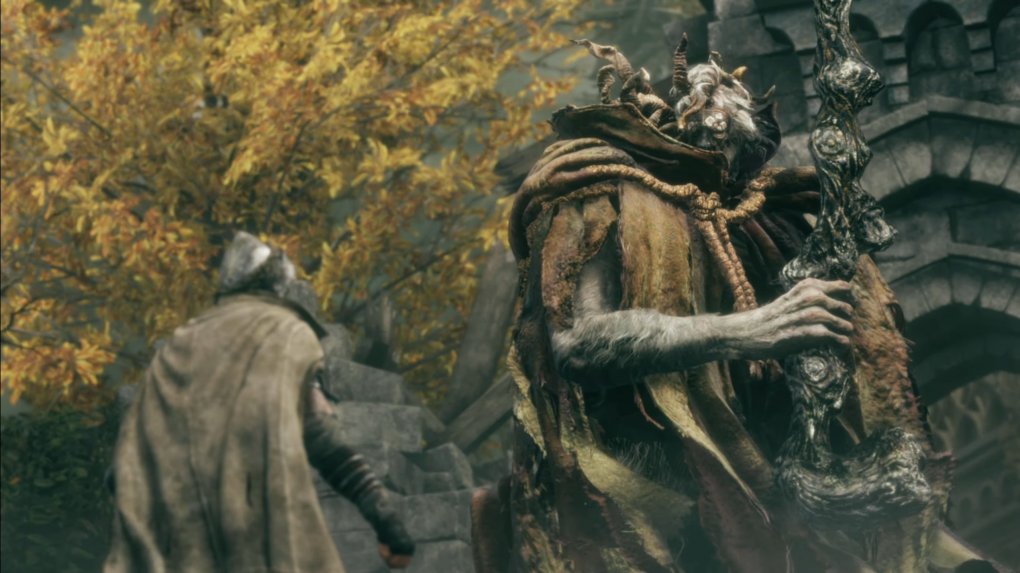 Source: Bandai Namco Entertainment
Margit can be a real challenge at the beginning. He teaches us to "come back later".
The whole idea of "come back stronger" just did not work for me. Maybe because I'm too stubborn, but in an open world, I wanna explore and get rewarded for it, no matter where I go. If there are high-level areas just as accessible as low-level ones, but I shouldn't visit them yet, then I don't need an open world at all.
Source: Bandai Namco Entertainment
Margit can be a real challenge at the beginning. He teaches us to "come back later".
The whole idea of "come back stronger" just did not work for me. Maybe because I'm too stubborn, but in an open world, I wanna explore and get rewarded for it, no matter where I go. If there are high-level areas just as accessible as low-level ones, but I shouldn't visit them yet, then I don't need an open world at all.
For me, this "come back later" concept became especially frustrating in the Shadow of the Erdtree DLC. FromSoftware tried to recreate the same progression system as in the base game, so they scattered Scadutree Fragments throughout the new open world. These fragments function as a secondary leveling system, increasing your attack power and defense depending on how many you collect.
Depending on where I go in the new open world, it's possible to get a boss thrown in my face that, without mercy, kills me in one or two hits. Then the game demands that I explore first, find some fragments, and "come back later". Only to notice: Oh. that boss isn't hard because it has a complicated moveset; I just didn't have enough fragments. Which ends up feeling like artificial difficulty, because it's just about numbers, not the core gameplay.
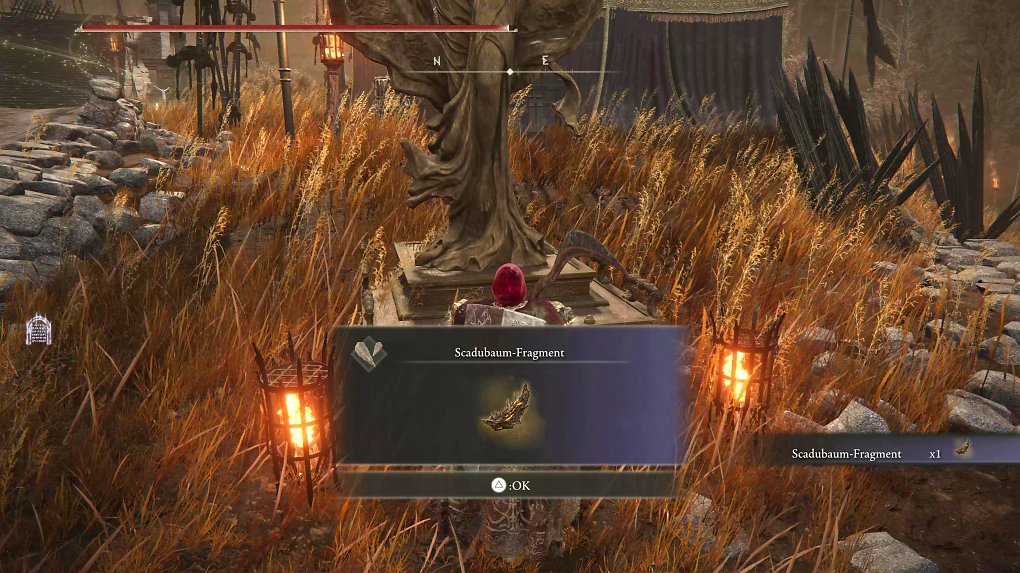 Source: PC Games
The fragments are scattered across the open world and can only be found while exploring.
Source: PC Games
The fragments are scattered across the open world and can only be found while exploring.
When exploration becomes a necessary task
Commander Gaius was where I got to experience this problem in full. He could one-shot my high-level character with a simple dash attack. I spent hours trying to beat him, and each attempt dragged on because I dealt so little damage.
He was the first boss in all of Elden Ring whose wall I could not break simply by bashing my head against it. Eventually, I returned to the open world in frustration and came back several hours later, only to discover that the same attack now took away just half of my health. At the same time, I was suddenly dealing so much more damage that the fight felt far too easy.
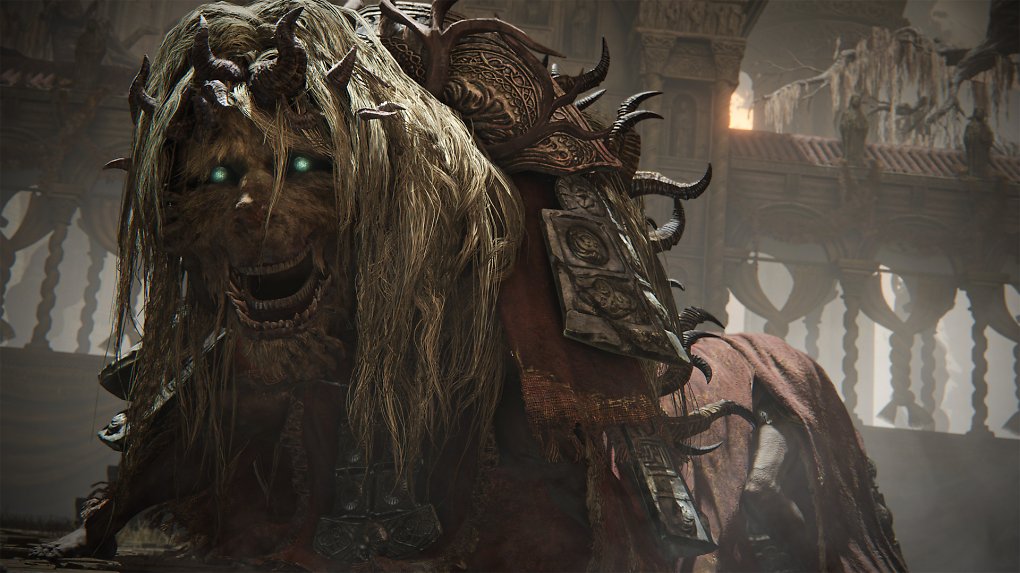 Source: Bandai Namco
I honestly have no idea what this boss does exactly. When I faced it, I was so strong via fragments that I could destroy him without any problems.
Sure, by that point I had learned his entire moveset from all my previous attempts. But that knowledge had not helped me much before, because a single mistake meant death. Until then, I had not even realized how much of a difference the Scadutree Fragments made, because the game had done a poor job of explaining just how powerful those upgrades really were.
Source: Bandai Namco
I honestly have no idea what this boss does exactly. When I faced it, I was so strong via fragments that I could destroy him without any problems.
Sure, by that point I had learned his entire moveset from all my previous attempts. But that knowledge had not helped me much before, because a single mistake meant death. Until then, I had not even realized how much of a difference the Scadutree Fragments made, because the game had done a poor job of explaining just how powerful those upgrades really were.
That was when I realized how quickly the whole "come back later" concept falls apart if I do not play the game exactly as the developers intended. The same problem also exists in the base game. Whenever I returned to a dungeon I had previously missed, I often defeated its bosses in one or two hits. Yay, gameplay. On the next page, I will explain how developers can avoid these problems.