Dragon Age: Inquisition: Vorschau mit vielen neuen Details - Leser-News von LordCrash
Das US-Spielemagazin GameInformer hat das Entwicklerstudio Bioware besucht und in seiner aktuellen Ausgabe viele neue Infos zu Dragon Age: Inquisition als Coverstory veröffentlicht. In einem umfangreichen Artikel werden die neuen Details zu Dragon Age: Inquisition zusammengefasst.
Bioware beteuern, dass sie das Feedback und die Kritik von Spielern bezüglich der beiden Vorgänger ernst nehmen und Dragon Age: Inquisition das Ergebnis dieses iterativen Designprozesses sei. Gleichzeitig betont man jedoch, dass man sich trotz vieler Beschwerden von Spielern nicht für Dragon Age 2 schäme oder gar entschuldigen möchte. Vielmehr war Bioware im Grunde mit dem Spiel zufrieden. Gleichwohl haben die Entwickler verstanden, dass sich viele Rollenspieler eher wieder eine Rückkehr zu den Tugenden von Dragon Age: Origins wünschen. Daher soll Dragon Age Inquisition ein erneuter Versuch sein, beiden Zielgruppen ein möglichst optimales Spielerlebnis zu liefern.
Die Grundlagen eines RPG - der Spielercharakter
Anders als noch in Dragon Age II kann der Spieler nun zu Beginn des Spiels wieder zwischen drei verschiedenen Rassen für seinen Spielercharakter wählen: Mensch, Elf oder Zwerg, jeweils männlich oder weiblich. Als Basisklassen stehen dem Spieler Krieger, Schurke und Magier zur Verfügung, die sich im Laufe des Spiels weiter spezialisieren lassen. Trotz verschiedener Rassen und Klassen startet man immer am gleichen Punkt, d.h. es wird keine speziellen Herkunftsgeschichten wie noch in Dragon Age Origins geben. Allerdings werden NPCs je nach Wahl von Rasse und Klasse unterschiedlich auf den Spieler reagieren und auch einzelne Quests und Gespräche können unterschiedlich verlaufen. Bioware hat angekündigt, dass der Spielercharakter dabei voll vertont sein soll. Wie in Dragon Age Origins startet der Charakter praktisch von null, d.h. er ist noch keine Persönlichkeit im Sinne eines Hawke aus Dragon Age II.
Zwei Helden ist besser als einer - die Inquisition
Wenig ist bisher über die Hauptgeschichte von Dragon Age Inquisition bekannt, nur die Rahmenbedingungen sind schon abgesteckt. Die Geschehnisse im Spiel finden circa zehn Jahre nach der Blight in Ferelden statt. In Orlais herrscht indes Bürgerkrieg zwischen dem Zirkel und den Magiern und ganz Thedas befindet sich in Aufruhr. Verschärft wird die Lage durch eine Invasion von Dämonen, die durch einen Riss ungehindert auf die Erde strömen können, was überall im Land Leid und Chaos zur Folge hat. Für die Öffnung des Risses, der es den Dämonen ermöglicht, sich frei auf Thedas zu bewegen, ist ein einzelnes "Mastermind" verantwortlich. Das ist jedoch das einzige Indiz, das der Spieler zu Beginn von Dragon Age Inquisition hat. Der Hauptfeind wird erst im Laufe des Spiels aufgedeckt werden. Der Spieler weiß bis dahin nur, dass jemand gegen ihn arbeitet. Der Spielercharakter ist auch der einzige Überlebende, der die Öffnung des Risses mitverfolgt hat. Ihm kommt nun die Aufgabe zu, den Gründen für dieses Ereignis auf den Grund zu gehen und den Verantwortlichen zu finden.
Zu diesem Zweck ruft der Spielercharakter zu Beginn des Spiels die Inquisition zurück ins Leben und nimmt deren Vorsitz ein. Von da an fungiert die Inquisition quasi als zweiter Held. Im Laufe des Spiels levelt man so nicht nur den eigenen Spielercharakter hoch sondern auch die Inquistion. Durch alles, was der Spieler im Spiel macht, kann die Inquisition stärker werden und an Einfluss gwinnen, etwa durch den Ausbau von Beziehungen, das Aufdecken von Geheimnissen, durch Erpressung von wichtigen Persönlichkeiten oder durch die Aneignung von altem Wissen.
Dabei ist die Inquisition eine eigene Fraktion im Spiel, die dem Spieler untersteht und die er für seine Agenda nutzen kann. Kommt der Spieler etwa im Laufe seiner Erkundungen an ein Schloss, dessen Burgherr ihm nicht öffnen will, so hat der Spieler die Möglichkeit, das Schloss durch die Inquisition belagern zu lassen. Allerdings muss er dann auch mit eventuell negativen Konsequenzen rechnen. Der Stellung der Inquisition in der Welt von Thedas und der Ausbau deren Einfluss ist ein zentraler Bestandteil der Story in Dragon Age Inquisition. Eine der Hauptaufgaben für den Spieler wird es sein, die Widerstände von anderen Fraktionen und Einflussgruppen wie der Kirche, dem Zirkel, den Templern oder den Magiern zu brechen und wechselnde Bündnisse mit diesen Gruppen einzugehen oder zu brechen. Obwohl es nahe liegt, dass die Inquisition auch einen zentralen Stützpunkt hat, schweigt sich Bioware bisher zu diesem Thema aus.
Eine Welt zum Erkunden - Open World?
 Quelle: Bioware
Spielern soll es möglich sein, viele verschiedene Länder und Regionen zu bereisen.
Dragon Age Inquisition soll laut Bioware nicht mehr auf eine Stadt (Dragon Age II) oder ein Land (Dragon Age Origins) begrenzt sein. Vielmehr soll es dem Spieler möglich sein, viele verschiedene Länder und Regionen zu bereisen. Da ein derartig weitläufiges Konzept mit einem "richtigen" Open World-Ansatz mit zusammenhängendem Gebiet nicht praktikabel ist, hat man sich bei Bioware für eine Weltkarte entschieden, auf der der Spieler ähnlich wie bei Baldurs Gate 2 verschiedene Orte und Regionen auswählen kann, zu denen er reisen möchte. Im Gegensatz zu den Vorgängern sollen aber die einzelnen Regionen viel größer sein und jede Region an sich schon ein Open World-Feeling bieten. Bioware verspricht dabei auch, einen der größten Kritikpunkte an Dragon Age II zu vermeiden: In Dragon Age Inquisition sollen schon allein aufgrund der Vielfalt von unterschiedlichen Ländern und Orten sich wiederholende Umgebungen ausgeschlossen sein. Kein Gebiet soll dem anderen gleichen und auch die Enge und Linearität der einzelnen Regionen und Dungeons gehört laut Bioware der Vergangenheit an.
Quelle: Bioware
Spielern soll es möglich sein, viele verschiedene Länder und Regionen zu bereisen.
Dragon Age Inquisition soll laut Bioware nicht mehr auf eine Stadt (Dragon Age II) oder ein Land (Dragon Age Origins) begrenzt sein. Vielmehr soll es dem Spieler möglich sein, viele verschiedene Länder und Regionen zu bereisen. Da ein derartig weitläufiges Konzept mit einem "richtigen" Open World-Ansatz mit zusammenhängendem Gebiet nicht praktikabel ist, hat man sich bei Bioware für eine Weltkarte entschieden, auf der der Spieler ähnlich wie bei Baldurs Gate 2 verschiedene Orte und Regionen auswählen kann, zu denen er reisen möchte. Im Gegensatz zu den Vorgängern sollen aber die einzelnen Regionen viel größer sein und jede Region an sich schon ein Open World-Feeling bieten. Bioware verspricht dabei auch, einen der größten Kritikpunkte an Dragon Age II zu vermeiden: In Dragon Age Inquisition sollen schon allein aufgrund der Vielfalt von unterschiedlichen Ländern und Orten sich wiederholende Umgebungen ausgeschlossen sein. Kein Gebiet soll dem anderen gleichen und auch die Enge und Linearität der einzelnen Regionen und Dungeons gehört laut Bioware der Vergangenheit an.
Einen zentralen Fokus legt Bioware bei Dragon Age Origins auf die Erkundung der Welt. Dabei steht es dem Spieler im Prinzip völllig frei, was er machen und wie er vorgehen will. So kann er zum Beispiel magische Relikte suchen, Mysterien aufdecken, Drachen bekämpfen, Menschen in Not helfen und diversen anderen Aufgaben nachgehen. Alle diese Tätigkeiten können dabei den Einfluss des Spielers in der Welt und vor allem auch den Einfluss der Inquisition stärken. Das Fortkommen in der Hauptgeschichte ist direkt mit diesem steigenden Einfluss der Inquisition verbunden. So wird die Story in Dragon Age Inquisition nicht wie bei Origins in Sequenzen eingeteilt, sondern es werden Storyevents ausgelöst, wenn die Inquisition eine bestimmte festgelegte Stärke erreicht hat. Damit möchte Bioware erreichen, dass der Spieler praktisch zur Erkundung der Welt gezwungen wird. Der Spieler soll keine klassische lineare Kampagne spielen, sondern das machen, wozu er Lust hat. Bioware verspricht jedoch, genügend Inhalte anzubieten, um mit diesem Konzept auch unterschiedlichen Spielertypen genug zu tun zu geben.
Ein ähnliches System hat Bioware schon in Dragon Age II verwendet, damals aber noch mit Geld statt mit Einfluss. Laut den Entwicklern führte dies dazu, dass viele Spieler sich zwischen dem Fortkommen in der Geschichte und dem Kauf von besserer Ausrüstung entscheiden mussten, was ursprünglich nicht Sinn der Sache war. Daher hat man sich für Inquisition für ein System entschieden, das diese beiden Elemente durch unterschiedliche Ressourcen (Geld und Einfluss) wieder trennt, d.h. man muss nun nicht mehr abwägen, ob man in der Story voranschreiten oder seine Ausrüstung verbessern möchte.
Um den Spieler zusätzlich zu motivieren, die Spielwelt zu erkunden, spickt Bioware die einzelnen Regionen mit geheimen Orten, die entweder komplett neue Spielregionen öffnen, besondere Ausrüstung oder Gegner bieten oder eigene Quests in Gang setzen. Erkundung soll somit grundsätzlich belohnt werden. Ähnlich wie in Baldurs Gate setzt Bioware darauf, dass alle Regionen eine eigene Geschichte haben und mit interessanten Orten und Personen gefüllt sind. Die Regionen sollen dafür so groß sein, dass es sogar ein Reitsystem geben wird (nicht unbedingt nur für Pferde....).
Nur wenige der in den Regionen antreffbaren Monster und Gegner leveln mit dem Spieler mit. Die meisten Gegner haben eine vorgegebene Stärke. Der Spieler soll somit motiviert werden, zu starke Gegener für später im Spiel aufzusparen und zurückzukommen, wenn er mehr Erfahrung gesammelt oder bessere Ausrüstung gefunden hat.








by Kimberley Wallace on August 19, 2013 at 03:00 PM
[Ins Forum, um diesen Inhalt zu sehen]
Many narratives thrive off their rivalries, and Dragon Age is no different. Tensions between the Templars and mages reached a new level with an all-out battle in Dragon Age II, with Hawke having to pick a side. Dragon Age: Inquisition throws you right into the aftermath, and the two groups are still at odds.
Finding The Catalyst
[Ins Forum, um diesen Inhalt zu sehen]
What if magic actually existed in our world? So many fantastical settings immerse themselves in the supernatural property, but few touch on how odd it would be to have people walking around with powers. When the Dragon Age team sat down, it was something they couldn’t ignore.
The conversation started off lighthearted as the group quickly recalled the Dungeons & Dragons spell “charm person,” which allows you to make someone your friend until the spell expires. The spell sparked some telling questions. “What if you met a mage and you could never be sure you like them?” asks lead writer David Gaider. “Do like them because they cast a spell on ?”
As the team talked, they focused on the paranoia that would come with a world where people possessed magical powers and how that would be an interesting story to tell. “You always have to have in the back of your mind, ‘What if this person had powers?’ What kind of suspicions would that breed? That’s where it eventually led to the Circle of Magi and the kind of the controls it would require,” Gaider recalls.
The controls BioWare decided on brought an abundance of tension to the Dragon Age world. By involving the Chantry, the prevailing religion of Thedas, in governing the Circle of Magi, it not only gave the vocal group additional power, but also let the Chantry spread and act on its message about the dangers of magic. For those who need a refresher, the Circle of Magi teaches mages how to control their powers. Chantry law dictates that anyone who gains powers must join the nearest circle and be monitored. Part of the monitoring comes from the Templars, who are the watchdogs for mages and the Circle, and hunt down the apostates who refuse to join.
According to Gaider, Dragon Age: Origins was about setting up this dilemma. As the team moved on to Dragon Age II, the focus shifted; “Then it was, ‘What would it take for that to come crashing down?’” Gaider recalls. As we all know, peace and order are constantly challenged...and maybe the mages are tired of being looked at as outcasts.
Choosing Sides
[Ins Forum, um diesen Inhalt zu sehen]
As seen throughout our own history, all it takes is one dominant group to forecast something as a threat and people will follow. Dragon Age’s asset is its two viewpoints people can relate to, and it set the stage for a tense rivalry fans latched onto and passionately defended on message board forums. In fact, even within BioWare’s own staff, team members disagree about who’s in the right.
On the one hand, the Chantry and Templars have a reasonable fear: Magic in evil or incompetent hands could be diabolical for society. For mages, this presumption of guilt is disheartening. “What would it feel like to have it assumed that you’re a time bomb waiting to go off?” Gaider asks. “Should I not be judged for the things that I do, not the things that I may do?”
These two disparate concepts drove players to think about magic in greater complexity. “It just seemed like such a juicy argument to dive into,” Gaider says. “Dragon Age has always been about hard decisions, where there’s not necessarily a clear moral path. But the idea is that if we can successfully argue either side of an issue and not feel like a sociopath doing so, then that is a good avenue for us to explore.”
In Dragon Age II, BioWare deliberately presented both groups at their worst, as creative director Mike Laidlaw puts it, “kind of accelerating or turning the volume up on each of their extremisms.” Instead of letting you watch, the game ended with you finally voicing support for one group or the other. “I think by letting the player put a stake in the ground with Hawke as your avatar was something that we needed to do, having been presented the increasingly loud evidence,” Laidlaw says.
“Dragon Age II is always about Hawke being drawn into events perhaps outside of his or her control, and we wanted to give the player the opportunity to see the conflicts start,” Gaider adds. “I think that was more at the heart of it than the player actually deciding, because it’s too large of an issue to resolve in a snap.”
The Continuing Battle In Dragon Age: Inquisition
[Ins Forum, um diesen Inhalt zu sehen]
The start of Dragon Age: Inquisition has the Chantry, Templars, and mages assessing the aftermath. The mages have declared their independence from the Chantry, allowing them to break away from the Chantry-controlled Circle. The Templars want to hunt down the mages, fearful of what they’ll do without control. But the Chantry, just as fearful, thinks it’s best to make peace. The Templars, enraged that the Chantry doesn’t see it their way, decide to split off. “Basically, you have a situation where the Templars are hunting mages in the streets,” Gaider says. “That’s not everything that Inquisition is about, but that’s where it begins. The world’s kind of falling apart.”
Entering Inquisition, tensions are higher than ever before, and no one is safe. Those who read Dragon Age: Asunder, a book that details some of the aftermath three years after the Mage-Templar war, already know of some of the chaos. “We struck down the mechanisms that would normally keep these things in check. Even the governments like Orlais are in a state of civil war that was established at the end of Asunder. So even there, the most powerful empire in the world is not in a position to intervene in these events either, so that just all plays into the state of the world at the beginning of Inquisition. We set up all our ducks in a row,” Gaider says.
This time around, it’s not about extreme viewpoints, though. You’ve seen both groups at their worst; now it’s time to see the other side. “I think a big part of Dragon Age II was letting the player see the people who thought that things were bad by these extremists,” Gaider says. “And now in Dragon Age: Inquisition we want to show the player the people who feel that they’re right. That they’re on the side of good, not from the side of, ‘I am an extremist who has this view that might be hard to understand,’ more, ‘This is why my position is morally correct.’” This also extends to seeing characters approach these views differently.
As many recall, Cassandra, a seeker of the Chantry, interrogated Varric about Hawke in an attempt to prevent war. “You will find out more as to why,” Gaider teases. “She wasn’t just investigating; there was more behind what she was doing. You find that out as the Inquisition comes around.”
[Ins Forum, um diesen Inhalt zu sehen]
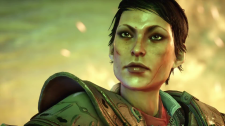
Both Cassandra and Varric have been confirmed as party members, but we didn’t get to know much about Cassandra in Dragon Age II beyond her mission. This will change in Inquisition. “To some degree, I think that Cassandra undergoes probably the biggest transformative arc of any character in Dragon Age II,” Laidlaw says. Cassandra has always supported the Chantry, but after talking to Varric and seeing both sides of the issue, her opinions may change. “In a lot of ways, I think she represents the opportunity to grow by understanding getting increasingly lost in the noise of Dragon Age’s rising chaos,” Laidlaw says.
Another character who may be set to re-enter the Dragon Age ring? The redheaded, religious bard Leliana. “We’ve been building Leliana up to essentially act as an agent to the divine,” Laidlaw says. “I think it would be fair to expect that she might have some say, especially given her appearance at the end of Dragon Age II. But beyond that, mum’s the word.” Leliana has always represented faith and spirituality, often testing belief and being a way to question players about how they feel about the Maker. “As far as I can tell, if you look among our fans, people have a lot of strong opinions on ,” Gaider says. “It’s a good place to go.”
The power is in your hands to bring peace back into the world as the Inquisitor. “We’ve always wanted to ask the question, ‘what if you could found the Jedi Order instead of becoming a Jedi?’” Laidlaw says. The space has been made for the Inquisitor to step in and shape the world as you wish. “If going to start something, what would it be? What would you make that you would want to be a part of?” Gaider asks, setting up the questions BioWare wants players to explore as the Inquisitor.
Inquisition takes players into darker pastures as alongside the warring groups, a new threat emerges: a tear opens up in the world and demons are pouring out. The questions are bound to get more complicated, and BioWare has put a lot of thought into your role as the Inquisitor. “Making the decision harder is stopping and thinking, ‘What is the right outcome? What do I want out of this problem? What do I need to have happen?’” Gaider says. “For some players that’s very simple, but if you can have an argument about it, that makes it Dragon Age.”
Quelle: Building A Dragon Age Rivalry: Mages Versus Templars - Features - www.GameInformer.com
Da die Frostbite-Engine zum Einsatz kommt, erwarte ich eine super Grafik, auch wenn die mir bei DA eigentlich nicht so extrem wichtig ist.
Und es wird wieder der gleiche Minikonflikt verwurstet, der bereits zuvor schon in beiden Teilen aufgesetzt und absolut konstruiert wirkte.
Egal, wieder mal Geld gespart. :-D
Bioware muss sich ja auch gar nicht für DA2 entschuldigen. Wieso auch?
1. Das Spiel war gerademal ca. anderthalb Jahre in Entwicklung, was für ein RPG doch extrem knapp ist. Was daraus wurde, ist zumindest ein gutes Action-RPG für Actionfreunde.
2. Jemand, der ein Bild malt, entschuldigt sich ja auch nicht für vermeintlich miese Pinselführung. Er malt es so, wie er kann und wie er es für richtig hält.
Wäre DA2 zudem noch mit zahlreichen Bugs geplagt, dann wäre eine Entschuldigung seitens Bioware wohl angebracht. Aber das Spiel kam fertig auf den Markt, nur eben mit zahlreichen falschen Designentscheidungen und arg kurzer Entwicklungszeit. Außerdem muss man es eben auch professionell sehen. Das sind immerhin arbeitende Leute.
Und das trotz der vermeindlich besseren Grafik :-D
Naja, Morrigan ist im 3. Teil ja auch ein paar Jahre älter. Klar, dass man da vielleicht nicht mehr so aussieht, wie früher. :D Ich fand sie in Origin hässlicher.
Und das trotz der vermeindlich besseren Grafik :-D
Naja, sie sieht jetzt eben mehr aus wie eine Hexe, was ja nicht ganz unpassend ist....;-)
Ich finde die neue Version aber ganz ansehlich und zum Glück ist die aufgespritzte Lippe passé... :-P
Und das trotz der vermeindlich besseren Grafik :-D
by Kimberley Wallace on August 12, 2013 at 12:00 PM
[Ins Forum, um diesen Inhalt zu sehen]
Morrigan is one of the most mysterious characters to grace the Dragon Age universe. The seductive mage keeps everyone guessing about her true intentions, and knows more than she lets on. If the cheers following her appearance in Dragon Age: Inquisition’s E3 trailer are any indication, fans are glad to have her back. With so many questions lingering, including Morrigan’s whereabouts since performing the dark ritual to conceive a child, Inquisition is her chance to return to glory. Not only do we catch you on to speed on Morrigan, but we also sat down with BioWare to discuss the creation of one of the most-discussed Dragon Age characters and her role in Dragon Age: Inquisition.
How Morrigan Came To Be
[Ins Forum, um diesen Inhalt zu sehen]
Lead writer David Gaider’s initial vision for Morrigan was vastly different from the defiant and vociferous woman he presented in Dragon Age: Origins. Strangely enough, Gaider first wrote Morrigan much like her nemesis: Flemeth, the woman who raised her. “Remember meeting Flemeth and she’s talking in circles and kind of out there? I had Morrigan kind of the same way,” says lead writer David Gaider. “She would never give you anything straight.”
Gaider wanted players to wonder what she was talking about every time she opened her mouth, but soon decided with the team that the whimsical Morrigan just wasn’t working. Gaider had to completely rewrite her, and he liked the idea of having a character speak obtusely, so he came up with a compromise. “I decided rather than make her like Flemeth, make her a teenage girl who just resents her mother. completely blunt because she doesn’t like that her mother talks in circles,” Gaider says.
With one hurdle for Morrigan overcome, the team was on to the next: Finding the perfect voice. BioWare considers this one of the most critical elements to a character. “Morrigan took forever to cast,” Gaider says. At one point BioWare settled on a different voice actress, but like Morrigan’s initial conception, decided she just wasn’t working for what they envisioned. But then Claudia Black (the actress who portrays Aeryn Sun in Farscape) came along in an unexpected way. “She did not actually audition for Morrigan,” Gaider says. Instead, Black sent in a recording she had done to let BioWare know she’d be interested in future projects. “We listened to it and were like, ‘that would be perfect.’ And of course I watched Farscape, so that was just great,” Gaider recalls.
Even with time away, Black came back for Inquisition’s trailer and delivered exactly what BioWare needed. “She falls right into that space again and she just has that whiskey voice that works so well,” Gaider says. “Every now and then you get a voice actor who just hits it out of the park the first time and makes what you wrote better,” Gaider adds.
The Morrigan We Know
[Ins Forum, um diesen Inhalt zu sehen]
Fans quickly became captivated by Morrigan’s mystique and sharp tongue, especially in her banter with fellow party member Alistair. Part of what makes Morrigan tick is her backstory and position within the Dragon Age world. Magic is feared in Thedas, and as a way to have keep their power in check, all mages are required to enroll in the Circle of Magi. Unsurprisingly, Morrigan refuses to comply, making her an apostate – a rogue mage – isolated from civilization. Morrigan’s upbringing is drastically different than most characters you encounter in Dragon Age, and she clearly hasn’t had many interactions or relationships with others because of it.
Most noticeably, Morrigan has a strained relationship with Flemeth, but Morrigan is unsure if the witch is actually her mother. When your caretaker is a legendary shapeshifting witch who is rumored to kill men through fear alone, it’s hard not to pick up on her tactics and resent her power. Whether Morrigan or Flemeth can be trusted is a lingering question, as they always seem to have ulterior motives.
Morrigan’s cryptic personality has worked well for the story and something Gaider deliberately wanted. “I had Morrigan talk a lot about herself in Dragon Age: Origins, and considering how ended, players walked away thinking, ‘how much of that is true?’” Gaider says. “You’d be foolish to recognize and then not have her take advantage of it, right? She knows the power that she has...”
Morrigan presents players with a big choice before the final battle against the Archdemon in Origins. She claims that a certain dark ritual would allow her to conceive a child and save a Grey Warden from having to make a grave sacrifice. She explains that the essence of the Archdemon, once it is slain, will go into the unborn child. Morrigan believes the child will then have the soul of an Old God. Male players are given the option of conceiving a child with Morrigan themselves, but even if they refuse, the other Grey Wardens of the world may not have the same resolve. After the final battle, Morrigan leaves and the child’s fate is unknown.
Morrigan’s departure to continue her mission was something Gaider felt strongly about. “From my perspective, making a strong female character is about having her have her own agenda,” Gaider says. “The most important thing for me when I wrote was that at the end even if Morrigan loved the player, she had this thing that she believed in, that was so important that she would do it regardless of the player. And I think that a lot of players expected that she would bend herself to do whatever they wanted because they’ve done the romance, gotten her approval up, and of course she would just sort of follow their destiny. But Morrigan has her own destiny.”
Role In Dragon Age: Inquisition
[Ins Forum, um diesen Inhalt zu sehen]
Morrigan’s fate is being teased for Dragon Age: Inquisition, and the anticipation of her role is keeping fans on the edge of their seats. One role she won’t have has already been confirmed. “I think it is fair for people to understand that will not be a party member,” says creative director Mike Laidlaw. “That’s going to disappoint some people, but I think it’s important for us to be upfront about that.” Although, she won’t be cast as one of the followers, her role is important. “It’s not a cameo. She plays a significant role,” Gaider teases.
Gaider and Laidlaw’s excitement for her return in Inquisition is palpable. They’ve been building up her return for some time now. “The kernel of Inquisition’s story we knew from about midway through Dragon Age: Origins. The story has been in the making for a very long time,” Laidlaw says. “The story of Inquisition is moment, which is a good way to think about it.” Fans were hoping that she’d make an appearance in Dragon Age II, but only heard her referenced a few times. The wait to see what Morrigan has been up to has been agonizing; fans have been waiting since 2010’s Witch Hunt DLC to be reunited with her. “I think you could say in Dragon Age II, we didn’t go to that story, but it has always been there, waiting for us,” Gaider says.
When asked if any references would come up from your past interactions with Morrigan, like about your Grey Warden if you romanced her, Gaider says, “Yes. The various states that Morrigan can be in – of which there can be quite a few, because we don’t know when to stop when it comes to making decisions – they’re all recognized. Whether or not they have the ultimate effect like the kind of reactivity someone imagines, that depends on the person. But we do recognize them and it does play a role of varying degrees depending on the surroundings.”
Does this mean Inquisition will tie up the loose ends in her story? The dark ritual has been in fans’ minds since Origins, but Morrigan has more depth than a single scheme. “ has a human role in this plot, which I think may surprise some people because they might only think of her as a plot device,” Gaider says. “She has this big plot she’s involved in, and while that’s true to an extent, I’m taking her to a human place. That will make sense after the fact.”
Dragon Age: Inquisition continues a story that’s been in the cards since 2009. With a character as brilliant and unpredictable as Morrigan, her role should be anything but ordinary. After all, Morrigan desires change in the world, and this might be her chance to see her wishes become reality.
Quelle: Dragon Age: Inquisition’s Morrigan – Past and Present - Features - www.GameInformer.com